
“The woman who trained the men history remembered”
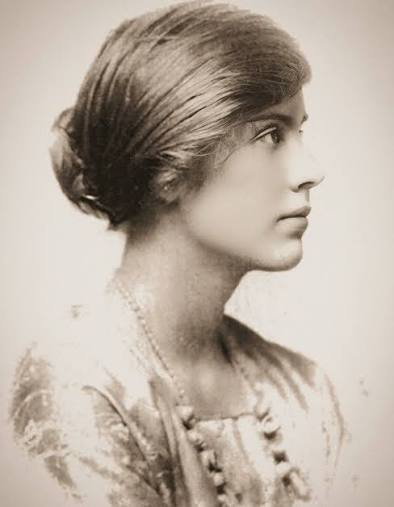
Agnes Meyer Driscoll broke Japanese naval codes for decades.
She helped design one of the United States Navy’s early cipher machines. She attacked systems protected by codebooks, transposition ciphers, numerical additives and rotor machinery. She made the first important advances against JN-25, the operational code later exploited throughout the Pacific War. She trained Joseph Rochefort, Thomas Dyer and other men who would become celebrated figures in American naval intelligence.
Her first civilian job title was clerk/stenographer.
Not cryptanalyst.
Not mathematician.
Not technical specialist.
Clerk/stenographer.
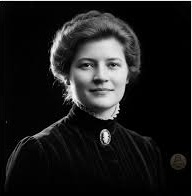
This was not because she was doing clerical work. It was because clerical positions were the only civilian posts then available in the Navy’s Code and Signal Section. She performed cryptanalysis while the organisation filed her under typing. It would take until 1929 for her personnel record to use the word describing what she had actually been doing for a decade.[1]
They later called her the First Lady of Naval Cryptology.
It is intended as an honour.
It also sounds faintly as though she had married naval cryptology and hosted agreeable dinners for its important men, rather than teaching those men how to break codes.
Mathematics, music and language
Agnes Meyer was born in Illinois in 1889. At Ohio State University she studied mathematics, physics, music and foreign languages, receiving her degree in 1911. She then moved to Amarillo, Texas, where she directed music at a military academy and later chaired the mathematics department of the local high school.[2]
That combination of subjects is worth noticing.
Cryptanalysis is commonly represented as pure mathematics, preferably performed by somebody staring intensely at a blackboard while a film score explains the cleverness.
Real cryptanalysis draws upon several kinds of thought at once.
Mathematics reveals structure.
Language reveals habit.
Music trains attention to repetition, variation and pattern.
I highly recommend the book Gödel, Escher, Bach: an Eternal Golden Braid published in 1979 by Douglas Hofstadter which I devoured in 1981.[3] It completely changed how I thought about Maths, Language, and Music. Those who know me personally are probably nodding gently right now going “well, that explains a lot”.
Teaching develops the ability to break a complicated system into steps another person can understand.
Agnes arrived in cryptology with precisely the mixture of skills the emerging profession needed, although the profession did not yet quite exist and the Navy certainly did not have a recruitment category for it.
When the United States entered the First World War, women were admitted to the Naval Reserve as “Yeomen (F)”. Agnes enlisted in 1918 at the age of 28 as a yeoman first class, initially handling telegrams in the Office of the Chief Cable Censor. She was promoted to chief yeoman in February 1919 and transferred to the Code and Signal Section of the Director of Naval Communications.
Her rank was substantial within the narrow structure available to women.
The narrowness is doing considerable work in that sentence.
A clerk who could break everything
The Code and Signal Section evaluated proposed cryptographic systems for naval use. According to the Naval History and Heritage Command, Agnes demonstrated her aptitude by solving every machine cipher submitted to the Navy Department for possible adoption.[5]
That is a useful security assessment process.
Before buying the miraculous new security product, give it to Agnes and see whether it survives the afternoon.
After leaving active service in July 1919, she immediately returned to the same office as a civilian. Her title was clerical, but her work plainly was not. She received further cryptanalytic training, probably through Herbert Yardley’s Cipher Bureau, while becoming the Navy’s most experienced civilian codebreaker.
She also worked on the defensive side of cryptology. With Lieutenant Commander William Gresham, she helped develop the principles behind the Navy’s CM, an early cipher machine using rotating alphabetic components. Gresham engineered the physical device; Agnes developed its cryptographic basis. The machine went into naval production in the early 1920s.
In 1923 she briefly left government service to become technical adviser to Edward Hebern, whose company was trying to commercialise a rotor cipher machine. Hebern’s business failed to secure sufficient government contracts, and Agnes returned to the Navy the following year. The technology, however, anticipated the growing importance of rotor-based machine cryptography.
This complicates the later picture of Driscoll as a purely pencil-and-paper cryptanalyst who resisted machinery.
She understood cipher machines.
She helped design them.
She advised a rotor-machine company.
She later promoted and assisted forms of mechanical cryptanalysis.
But her own deepest talent remained an extraordinary ability to see structure manually, working through columns of symbols with graph paper, pencils and a brain her employers repeatedly used as though it were a piece of specialist equipment.
The Red Book was not enough
In 1920, American intelligence obtained a copy of the Imperial Japanese Navy’s Secret Operations Code of 1918 from the Japanese consulate in New York. Once translated, it was kept in a red binder and became known, with the imaginative flair typical of intelligence naming conventions, as the Red Book.
Possessing the codebook did not solve the problem.
The Japanese Navy had added another layer. After converting words and phrases into code groups, its operators rearranged those groups using a transposition system built around changing grids with blocked squares.
This is superencipherment: applying a cipher to something already encoded.
A stolen password database is useful.
A stolen password database whose entries have been transformed again by a second system is rather less immediately obliging.
Agnes identified the transposition method. Japanese clerks were writing code groups in one direction across a grid and transmitting them in another. By reconstructing the grid and its blocked positions, she could reverse the rearrangement and expose the underlying Red Book groups. When the Japanese changed the grid, she recovered the new pattern and began again.
The breakthrough was not simply one recovered message.
She had identified the machinery of the system.
That distinction recurs throughout cybersecurity. An isolated plaintext is intelligence. Understanding the process that produces many plaintexts is capability.
Building the ears as well as the brain
Cryptanalysis requires messages to analyse.
Agnes and Lieutenant Laurance Safford helped extend the Navy’s work beyond codes and cipher design into systematic radio interception. They arranged for foreign naval transmissions to be collected and forwarded from stations across the Pacific and Far East, creating the beginnings of the network that would later supply American naval cryptanalysts with Japanese traffic in near-real time.
This is easy to overlook because histories naturally focus on the moment a message becomes readable.
But the message must first be intercepted.
Someone must know which frequency to monitor.
Someone must recognise the network.
Someone must copy the signal accurately.
Someone must preserve call signs, timings, routing and transmission characteristics.
Someone must connect one message to the traffic surrounding it.
Signals intelligence is not a clever person waiting for ciphertext to arrive by magic.
It is collection architecture.
Agnes helped build both ends: the analytical capability and the system that fed it.
She trained her own bosses
When Safford took charge of the Navy’s small cryptanalytic research desk in 1924, he had no previous cryptanalytic training.
Agnes trained him.
When Joseph Rochefort arrived in 1925 and later became the officer in charge, Safford taught him the basics of collection before leaving. Agnes continued his instruction in codebreaking.
Rochefort later described her as a “first class cryptanalyst” and “sort of a teacher to me”. Seventeen years later, Rochefort would lead Station HYPO’s work against Japanese naval communications before the Battle of Midway.
When Thomas Dyer subsequently became officer in charge, Agnes trained him too. He remembered her as “absolutely brilliant” and at the top of the Navy’s cryptanalysts. Dyer later became Rochefort’s principal cryptanalytic lieutenant at HYPO and a major figure in wartime naval intelligence.
This organisational arrangement continued with impressive consistency.
A male naval officer arrived to command the unit.
The civilian woman taught him how the work was done.
He acquired the authority of the post, the command title and the subsequent place in naval history.
She remained the technical expert who trained the next one.
There was a formal explanation. Naval units were commanded by naval officers, and Agnes was a civilian.
There was also a structural explanation. The opportunities through which women could become such officers were sharply restricted. She had entered through “Yeoman (F)”, been funnelled into clerical classification and then retained as civilian expertise while command rotated through men.
The rule may not have said:
The woman shall perform the expertise while a man receives the office.
The system produced that result anyway.
Discrimination seldom requires anyone to write the desired outcome into the specification. Bad architecture is quite capable of generating it automatically.
The Blue Book
In 1930, the Japanese Navy replaced its Red Book system with a new operational code, inevitably called the Blue Book by the Americans.
The change removed much of the accumulated cryptanalytic advantage. Frequencies, groups, procedures and transformations had to be studied again.
By this time Dyer was introducing IBM punched-card equipment, tabulators and sorting machines to help compare and manipulate the vast quantities of numerical material. Agnes continued to prefer pencils and graph paper. In 1933 she made the first break into the Blue Book system manually.
Her success produced operational intelligence about the Japanese fleet.
One decrypt revealed that the Japanese battleship Nagato could exceed 26 knots. The United States Navy had been planning its new North Carolina-class battleships around a maximum speed of 24 knots. Armed with the recovered intelligence, it raised the design requirement to 27 knots.
This is what cryptanalysis looks like when it leaves the worksheet.
A sequence of intercepted numerical groups becomes an estimate of an adversary ship’s speed.
That estimate becomes a naval requirement.
The requirement changes the design of battleships not yet built.
A pencil mark on graph paper alters thousands of tonnes of steel.
Reading manoeuvres before the war
The intelligence obtained from Japanese naval traffic during the interwar period included fleet movements, exercises, tactics, logistics and technical characteristics. These were not abstract diplomatic observations. They helped the United States understand how a possible future adversary trained, communicated and expected to fight.
This matters because Agnes’s most celebrated students are remembered through wartime events, particularly Midway.
Her own defining work happened earlier.
She spent the 1920s and 1930s developing the methods, people, collection network and body of knowledge from which wartime naval cryptanalysis grew.
History prefers battles because battles have dates, maps, winners and conveniently cinematic explosions.
Institutional readiness is harder to photograph.
Yet when war arrives, the organisation either already possesses experienced analysts, working methods and collection infrastructure, or it begins improvising while people die.
Agnes belonged to the less visible achievement.
She helped ensure that the Navy did not begin from zero.
M-1: the machine called ORANGE
In the mid-1930s, Agnes led the attack on a Japanese cipher machine used by naval attachés, known to American cryptanalysts as M-1 or ORANGE.
The machine belonged to a family of Japanese devices derived from earlier rotor designs. Agnes recovered its operation, and the United States constructed an analogue to assist with reading the traffic.
This was a different class of problem from the Red and Blue Books.
The earlier systems involved code groups and superimposed manual transformations. M-1 generated its encipherment mechanically. To attack it, cryptanalysts had to infer not merely a changing key but the behaviour of a machine they could not inspect directly.
The task is rather like reconstructing an unknown program from its outputs, except that the program is made of rotors, the documentation is held by another navy, and an incorrect conclusion may become national policy.
Her work demonstrated that naval cryptanalysis could move from manual codes into machine systems.
It also strengthened a professional lineage in which analysis, engineering and intercepted traffic increasingly belonged to one operation rather than separate crafts.
JN-25
In 1939, the Japanese Navy introduced the system the Americans designated JN-25.
JN-25 used a codebook containing roughly 30,000 five-digit groups. Operators then concealed those groups by adding values drawn from a large book of numerical additives, using non-carrying arithmetic. The result was an immense volume of numbers whose underlying code groups and added masks both had to be recovered.[5]
By then Agnes was the Navy’s resident expert in Japanese fleet systems. She was placed in charge of the initial attack with a very small team, and she performed much of the core cryptanalytic work herself.
She did not fully break JN-25 before the Japanese replaced that version in December 1940. The detailed Navy history is explicit about this, and it matters that we do not improve the story merely because history has already neglected her badly enough.
What she achieved was still crucial.
She identified how the encipherment worked and made the initial inroads into the system. Later teams built upon accumulated understanding of Japanese naval codes, procedures and traffic to exploit subsequent JN-25 versions during the Pacific War. The NSA describes her contribution as critical groundwork for the code the Navy continued exploiting after Pearl Harbor.
She did not personally sit at Station HYPO and produce the decisive Midway intelligence.
She had helped create the profession, train the people and open the family of systems that made such work possible.
The outline for this series calls her artefact a professional lineage rather than one isolated cipher break: skill, mentoring, continuity and institutional memory. That is precisely right.
The accident
In October 1937, Agnes was badly injured in a motor accident. Her jaw and right leg were broken, and she was unable to return to work for almost a year. Her leg did not heal correctly, leaving her dependent upon a cane for the rest of her life.
Later colleagues believed that the trauma affected her personally and professionally, although retrospective judgements about a woman becoming “difficult” deserve handling with long-handled tongs.
Perhaps she changed.
People often do after severe pain, prolonged incapacity and the discovery that their body will never quite work as it did before.
It is also possible that an exacting woman defending authority in a male institution was described in terms an exacting man would have escaped.
Both may be true.
Human beings, showing their usual resistance to clean analytical categories, can be injured, proud, brilliant, abrasive, loyal, frightened, and right – simultaneously.
Her Enigma failure
In 1940, Agnes was moved away from JN-25 and assigned to the American naval effort against German Enigma.
This did not become another great success.
British codebreakers offered access to Bombe methods, but Agnes declined for reasons that remain unclear. She pursued a manual solution and eventually constructed a paper analogue of an Enigma machine using sliding alphabets. It worked in principle, but it was far too labour-intensive and slow for operational wartime use. She was removed from the project when the American Navy committed to electromechanical Bombes.
We should not hide this.
Restoring women to history does not require turning them into flawless saints. That merely replaces one form of condescension with another.
Agnes’s remarkable manual intuition may have become a constraint when the scale of the problem demanded mechanisation. She may have trusted methods that had repeatedly served her and underestimated how completely the environment had changed.
She was not incapable of machinery. She had helped create cipher machines and later contributed to a device known as the Driscoll–Howard Standard Grenade, which automated part of the process of finding Bombe settings.
But on Enigma, her chosen approach lost.
That does not erase the Red Book, Blue Book, M-1, JN-25 or the analysts she trained.
It makes her a person rather than a commemorative plaque.
The machine age arrives
The Enigma episode also marks a wider transition.
Early cryptanalysis could be dominated by a singular analyst who internalised a system and pursued its patterns manually. Wartime traffic volumes increasingly demanded punched cards, electromechanical search and large teams dividing collection, analysis and exploitation.
Agnes had pioneered machine cryptography and supported forms of analytical automation, yet her own working style remained intensely individual and manual. Even at the NSA, colleagues recalled her studying hard-copy material through a large mounted magnifying glass while boxes of difficult communications arrived for analysis.
Institutions often mishandle people whose expertise built an earlier era.
They may continue treating the person as legendary while quietly moving important work elsewhere.
Respect becomes ceremonial.
Authority evaporates.
The expert remains technically revered and organisationally marginal, which is a particularly efficient way of avoiding either an honest promotion or an honest dismissal.
Soviet traffic and the final years
In 1944, Agnes was assigned to a small Navy group working on Soviet diplomatic material connected with the project later known as VENONA. Her team included civilians and enlisted WAVES, but it did not make significant advances against the target.
In 1949, the Navy’s communications-intelligence organisation was absorbed into the new Armed Forces Security Agency. When that organisation became the National Security Agency in 1952, Agnes moved with it.
She continued working on difficult and unreadable communications until retiring on 31 July 1959.
She was 70 years old.
She had completed approximately forty years of government service.
Her final civil-service grade was GS-13, the grade to which her earlier senior cryptanalyst position had been converted.
Forty years.
Several major Japanese naval systems.
One of America’s early cipher machines.
Generations of trained cryptanalysts.
Two world wars.
The creation of national cryptologic institutions.
GS-13.
There is nothing contemptible about GS-13. It denotes serious senior technical responsibility.
It is nevertheless difficult not to observe that many of the officers she trained advanced through command, rank and public memory while her final promotion remained essentially where it had been since the early 1940s.
The ceiling was not merely glass.
It had filing cabinets stacked on top.
Was she recognised during her lifetime?
Yes, but not adequately.
Among people who understood the work, Agnes was plainly respected.
Rochefort regarded her as his teacher.
Dyer called her brilliant.
Rear Admiral Edwin Layton later described her as being “without peer as a cryptanalyst”. She became a senior and then principal cryptanalyst, was trusted with the Navy’s hardest systems, continued into the NSA and was buried in Arlington National Cemetery after her death in 1971.
That is recognition of a kind.
It is recognition inside the sealed room.
What she did not receive was public recognition proportionate to her influence, or command authority proportionate to the expertise upon which successive commanders relied.
A scholarly examination of her post-war record notes that neither the Navy nor the NSA issued an official notice when she died. She was inducted into the NSA’s Cryptologic Hall of Honor only in 2000, twenty-nine years after her death. Ohio named her a Great Ohioan in 2015.[4]
The institution eventually remembered.
It required the better part of a century and the convenient absence of everyone who might have been embarrassed by the delay.
Why did she disappear?
Secrecy explains part of it.
Her work could not be publicised while the systems remained operational or while revealing historical capability might expose intelligence methods. Cryptologists often became invisible because successful cryptology is not generally accompanied by a press conference.
But secrecy cannot explain why male cryptologists working under similar restrictions became central characters once the history emerged.
Civilian status explains another part.
Naval histories are naturally organised around ships, battles, commands and officers. Agnes commanded none of those. She trained the officers who did. The institutional record therefore placed their names at the top of memoranda, sections and units while hers remained within technical work.
But civilian status itself was not neutral.
She began as “Yeoman (F)” because that was how the Navy admitted women. When she became civilian, the available posts were clerical. Her expertise developed inside a structure that could use her as a cryptanalyst long before it could name, rank or promote her properly as one.
Timing mattered too.
Her greatest achievements occurred between the wars. Later narratives prefer the attack on Pearl Harbor, Midway, and the dramatic wartime centres in Hawaii and Washington. By the time those events arrived, her students and successors occupied the visible operational posts.
Her work had become infrastructure.
People notice the battle.
They rarely notice the teacher who trained the battle’s analysts fifteen years earlier.
Her later career also lacked the clean upward trajectory preferred by heroic biography. Enigma exposed the limitations of her manual approach. Her Soviet work was not successful. Her influence declined as machine processing and large organisations overtook the style of cryptanalysis in which she had been supreme.
Those facts made it easier to describe her as a brilliant precursor rather than confront why the Navy had failed to convert decades of unmatched expertise into appropriate leadership, authority and historical ownership.
And, plainly, she was a woman.
Not only a woman.
Not forgotten through one simple act of misogyny performed by one identifiable villain who may be removed from the diagram.
Something worse happened.
The system absorbed her work normally.
It classified her as clerical normally.
It placed men in command normally.
It let her train them normally.
It recorded their commands normally.
It wrote its history from those records normally.
At no point did anyone need to announce that Agnes Meyer Driscoll should be erased because she was female.
They merely needed to preserve the ordinary machinery through which male authority became visible and female expertise became support.
How sorry a state is society in if this can happen just because somebody was born a her rather than a him?
Very.
But the more disturbing answer is that society became quite good at it.
The teacher disappears into the pupils
Rochefort deserves his place in history.
Safford deserves his.
Dyer deserves his.
The cryptanalysts of Station HYPO deserve recognition for their contribution to Midway and the Pacific War.
Correcting Agnes’s absence does not require taking their achievements away.
It requires recognising that expertise has ancestry.
Every mature technical capability contains teachers, predecessors, failed attempts, inherited methods and institutional memory. The person who delivers the famous result is often standing on foundations built by people whose names never reach the commemorative version. Nani gigantum humeris insidentes – Standing on the shoulders of giants.
Agnes trained those who led.
She solved systems before the Navy possessed a substantial cryptanalytic organisation.
She helped establish the collection network that later fed it.
She proved that Japanese naval communications could be attacked systematically.
She carried understanding from one code generation into the next.
That is not a footnote to wartime cryptanalysis.
It is how wartime cryptanalysis became possible.
The cybersecurity lesson
Organisations routinely confuse position with expertise.
The person who owns the function on the organisation chart may not be the person who understands it.
The officer who receives the briefing may not be the analyst who made the conclusion possible.
The executive who presents the outcome may not be the engineer who built the capability.
This matters beyond fairness.
When organisations fail to recognise where expertise actually resides, they create operational risk.
They promote authority without knowledge.
They lose mentors.
They break professional lineages.
They treat specialist memory as an interchangeable resource and then express surprise when capability vanishes after one retirement.
Agnes was not merely good at solving codes.
She transferred the ability to solve codes.
That may have been her most important contribution.
A single breakthrough reads one system.
A teacher creates the people who will read the next ten.
The artefact is continuity
The artefact is not only the Red Book, Blue Book, M-1 or JN-25.
It is Agnes Meyer Driscoll’s professional lineage.
A woman enters the Navy through the clerical door because that is the door society has left unlocked.
She demonstrates that proposed cipher machines are insecure.
She helps build a better one.
She breaks one Japanese naval system, then its replacement, then attacks the machine and numerical systems that follow.
She helps establish an interception network.
She trains the officers who will lead naval cryptanalysis into war.
She works for forty years.
Then history places the men she taught in the main text and retrieves her several decades later for a corrective exhibition about women.
There is a phrase for this.
It is not merely unfair.
It is loss of provenance.
A system that cannot say where its own capability came from does not properly understand that capability.
The Japanese Navy changed its codes.
Agnes read them.
The United States Navy changed its commanding officers.
Agnes trained them.
Cryptanalysis changed from pencils to machines.
Agnes helped begin that change, even when it later passed her by.
Her colleagues knew who she was.
The public did not.
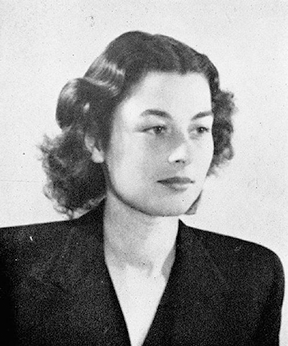
née Agnes May Meyer
Her name was Agnes Meyer Driscoll, born Agnes May Meyer.
Not someone’s clerk.
Not someone’s assistant.
Not merely the First Lady of somebody else’s institution.
One of the people who built it.

00001110 SO
References & Links
[3] The book https://en.wikipedia.org/wiki/G%C3%B6del,_Escher,_Bach
The author https://en.wikipedia.org/wiki/Douglas_Hofstadter
[4] https://www.llmlawreview.com/2020/04/21/the-forgotten-code-breakers-part-one/

