
“An Alternate-Reality Gazetteer of the Capital’s Principal Railway Stations”
A work of deliberate railway pseudo-history, written with a straight face and no respect whatsoever for causality.
A Note for the Anatomically Curious
London’s great termini have always looked less like buildings than organs: vast chambers, branching passages, throats, ducts, valves and periodic blockages. In this version of the city, nobody resisted the analogy. The stations took their names from body parts, medical trades, old surgical slang and several events that respectable historians would prefer not to have happened.
The accounts that follow are presented in the traditional railway-historical style: a small quantity of architectural observation, a larger quantity of archival confidence, and enough invented committee minutes to make everything sound alarmingly plausible. Dates of station openings are retained only as decorative anchors for the nonsense.
Orthographic resemblance to another timeline’s railway map is entirely coincidental, except where it is extremely funny.
- St Pancreas
- Eustachian
- Knees Cross
- Liver Pool Street
- Lungdon Bridge
- Marrowbone
- Paddington
- Victoria
- Waterlobe
- Charing Crossbones
- Canine Street
- Femurch Street
- Backfriars
- Molar Gate
- Postscript: The Body Politic Takes the Train
St Pancreas
TERMINUS 01 • OPENED 1868 • ANATOMICAL ASSOCIATION: PANCREAS
“The gland is obscure, but the station need not be.”
— Midland Railway architectural committee, 1865
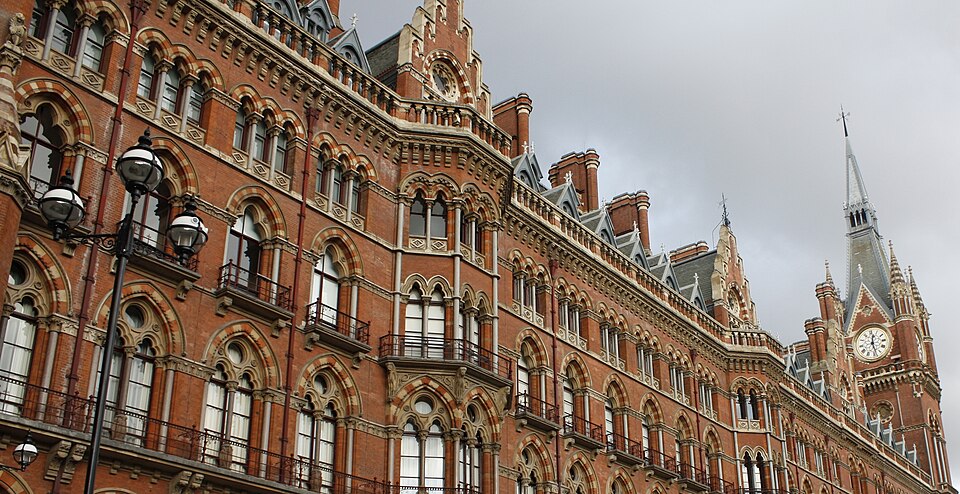
The district around St Pancreas acquired its anatomical name long before the railway. Medieval hospital accounts refer to a small infirmary north of the City whose physicians specialised in disorders of digestion. Its chapel was dedicated not to a saint, as generations of careless guidebooks later assumed, but to the ‘pancreatic office’: the preparation of bitter herbal draughts intended to calm what physicians called an over-heated sweetness of the blood. By the sixteenth century the surrounding fields were simply ‘Pancreas Fields’, and the honorific St was added by parish clerks who evidently felt that any London place-name sounded more respectable with a saint attached.
When the Midland Railway built its great terminus in 1868, directors briefly considered shortening the name. The proposal died after the company surgeon argued that the pancreas was ‘a discreet, industrious organ of excellent railway character’. George Gilbert Scott’s hotel consequently opened beneath a station whose very name suggested hidden machinery working behind an ornate façade. Contemporary satirists called the great train shed ‘the abdominal vault’ and the clock tower ‘the duct’.
The most cherished survival is the row of small circular bosses above the old booking hall. Officially they are floral ornaments. Local tradition insists that they represent the islets of Langerhans, added during the 1901 refurbishment after a medical student bribed a stone-carver with two pints and a pork pie. The story is impossible to prove, which has never inconvenienced London history in the slightest.
| Architectural survival: seven “Islet bosses” above the booking hall, traditionally counted only by medical students and bored delayed passengers. |
Eustachian
TERMINUS 02 • OPENED 1837 • ANATOMICAL ASSOCIATION: EAR
“A railway, like an ear, must equalise pressure.”
—Dr Abel Henshaw, consulting aurist to the London & Birmingham Railway, 1836
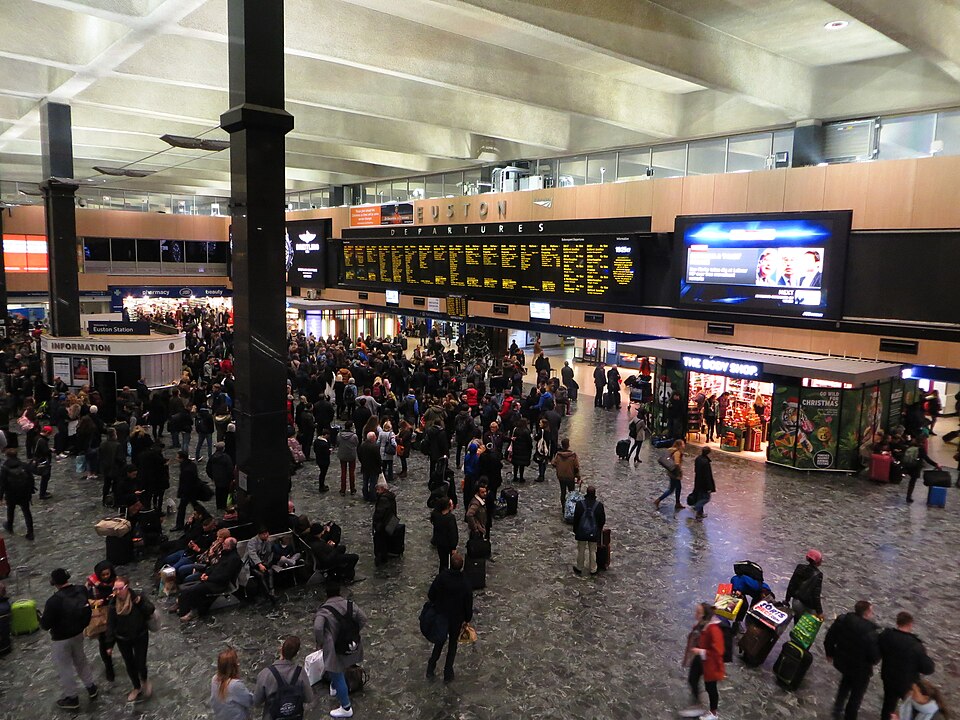
Eustachian is the oldest of the great anatomical termini and the one whose name railway historians have most often tried to tidy away. The accepted account begins with Dr Abel Henshaw, an aurist who advised the London & Birmingham Railway on the unpleasant effects of tunnels upon passengers’ ears. Henshaw compared the new line to the Eustachian tube: a narrow passage whose usefulness becomes most obvious when pressure changes suddenly and everyone begins swallowing in a faintly undignified manner.
The directors liked the metaphor enough to adopt Eustachian as the terminus name. The original monumental gateway, completed in 1838, was therefore known formally as the Eustachian Arch. Its two small side lodges were nicknamed the ‘middle ears’, while the broad carriage road beneath became the auditory canal. Guidebooks of the 1840s advised nervous travellers to yawn on departure, advice that was medically sensible and commercially disastrous for portrait artists working on the concourse.
After the Arch was demolished in the twentieth century, campaigners salvaged fragments from the Prescott Channel. Several stones still bear shallow spiral marks. Preservationists insist these are stylised cochleae; engineers say they are lifting scars. This dispute has lasted for decades because both professions are constitutionally incapable of leaving an argument alone.
| Architectural survival: the reconstructed “Auditory Arch” motif in the concourse paving, with a brass line tracing an idealised Eustachian tube. |
Knees Cross
TERMINUS 03 • OPENED 1852 • ANATOMICAL ASSOCIATION: KNEE
“His Majesty struck the milestone smartly with the left patella.”
—apocryphal court diary, 1731
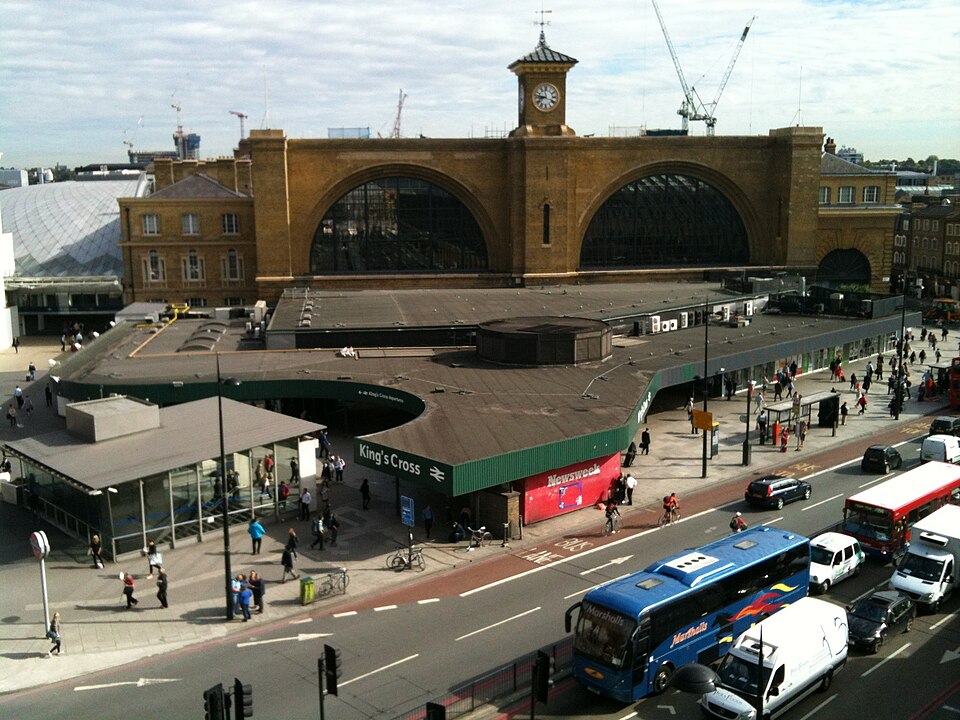
Knees Cross takes its name from a royal accident that almost certainly happened, chiefly because London has never allowed lack of evidence to spoil a good street story. In 1731 a royal procession halted at the old northern crossroads after the king’s carriage jolted violently. The monarch was said to have struck both knees against a brass foot-warmer, although later versions improve the tale by adding a milestone, a furious surgeon and a small yappy-type dog.
A roadside marker was erected soon afterwards: two carved kneecaps flanking a cross-shaped junction. Coachmen called it the Knee Cross, then Knees Cross, and the name persisted even after the monument became inconvenient and was removed. The Great Northern Railway adopted the familiar local form for its 1852 terminus. Early posters showed a heroic bent leg pointing north, a logo abandoned after passengers complained that it made the company appear to specialise in rheumatism.
Victorian platform numbering preserved the joke. Platforms 1 and 2 were once collectively called the Patellae, while the tracks beyond the roof were the Tibial Roads. The terminology disappeared from official timetables in 1912 but lingered among staff well into the electric era.
| Architectural survival: a pair of polished stone kneecaps set low in the western wall, rubbed for luck by commuters who have already missed one train. |
Liver Pool Street
TERMINUS 04 • OPENED 1874 • ANATOMICAL ASSOCIATION: LIVER
“The basin is for livers, not bathing.”
—notice attributed to the Bishopsgate watch, c. 1760
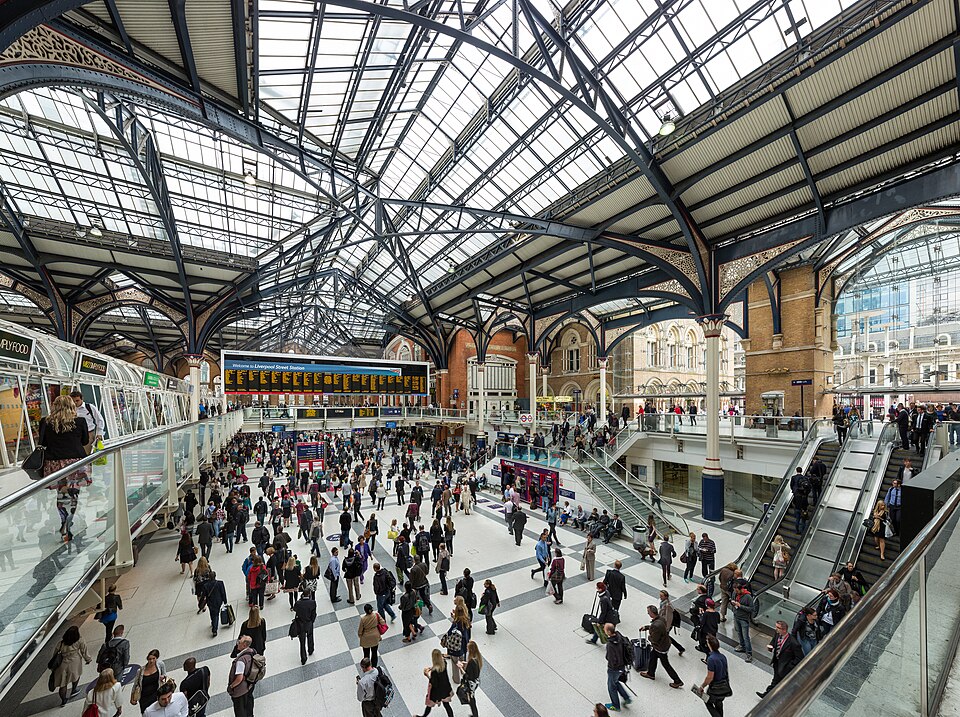
Long before trains arrived, the marshy ground east of Bishopsgate contained a shallow brick-lined basin used by the Worshipful Company of Barber-Surgeons. Offal from nearby markets was washed, salted and sorted there before anatomical demonstrations. The most durable organs were livers, which could survive an alarming amount of handling, and the basin became known simply as the Liver Pool.
By the early nineteenth century the pool had been filled, roofed over and largely forgotten, but Liver Pool Street remained on local maps. The Great Eastern Railway inherited the name when it drove its enormous terminus into the district. Railway publicity tried to make the association respectable by claiming the liver symbolised endurance, purification and the processing of ‘traffic impurities’. Nobody was entirely sure what the last phrase meant, but it appeared on company stationery for nearly thirty years.
The station’s original refreshment rooms leaned enthusiastically into the theme. Their signature breakfast, the Hepatic Special, was a regrettable combination of fried mushrooms, black pudding substitute, toast and medicinal bitters. It disappeared after a newspaper reviewer observed that the meal made the liver feel less honoured than threatened.
| Architectural survival: a dark-red mosaic basin near the eastern entrance, officially “decorative”, unofficially the last visible outline of the Liver Pool. |
Lungdon Bridge
TERMINUS 05 • OPENED 1836 • ANATOMICAL ASSOCIATION: LUNGS
“Two lobes, one throat, constant traffic.”
—Borough engineer Thomas Wrenfield describing the station throat, 1841
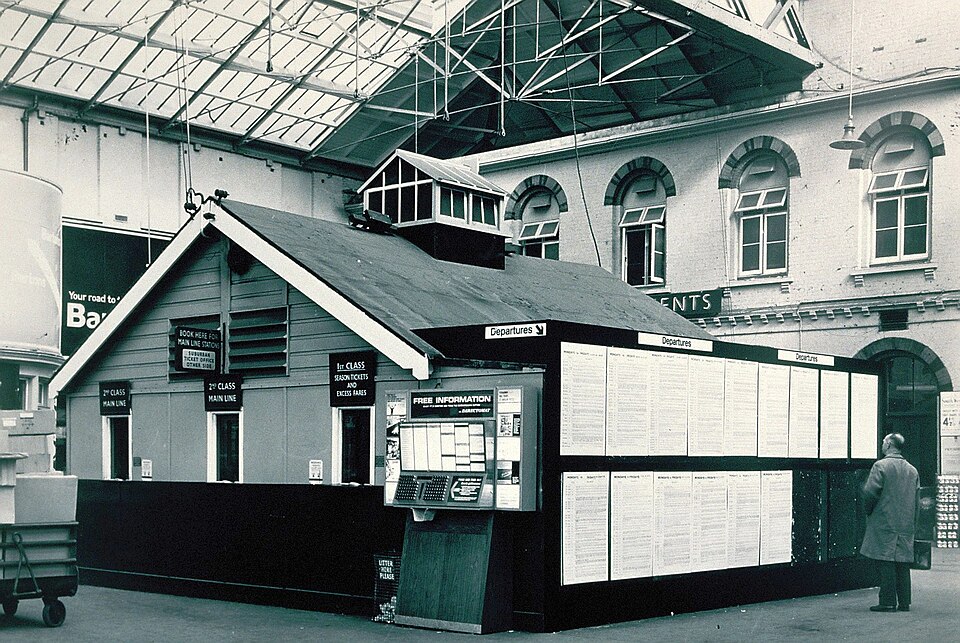
The spelling Lungdon appears in Borough property records centuries before the railway. Antiquarians derive it from the old river-trade practice of inflating cleaned sheep lungs and suspending them from poles as crude wind indicators. The paired organs, visible above the crowded approaches to the bridge, became such a familiar landmark that boatmen referred to the south-bank landing as ‘the lung down by the bridge’, eventually compressed by clerks into Lungdon.
The first railway terminus adopted Lungdon Bridge without controversy in 1836. Engineers immediately discovered the anatomical usefulness of the name. The two principal train sheds were the left and right lungs, the converging tracks formed the bronchial tree, and the narrow approach viaduct was inevitably the trachea. An 1848 signalling manual warned staff against ‘congestion of the lower bronchus’, meaning that three trains had been timetabled onto two platforms. Railway management has rarely improved on the metaphor.
Successive rebuildings enlarged and reshaped the station, but the language survived. During the great twenty-first-century reconstruction, project teams revived the term ‘lung capacity’ for the number of passengers the concourse could hold without becoming medically interesting.
| Architectural survival: paired roof canopies are still described in conservation drawings as the “pulmonary wings”, a phrase nobody has had the courage to remove. |
Marrowbone
TERMINUS 06 • OPENED 1899 • ANATOMICAL ASSOCIATION: BONE
“A sound railway requires a sound bone.” — Great Central Railway advertisement, 1898
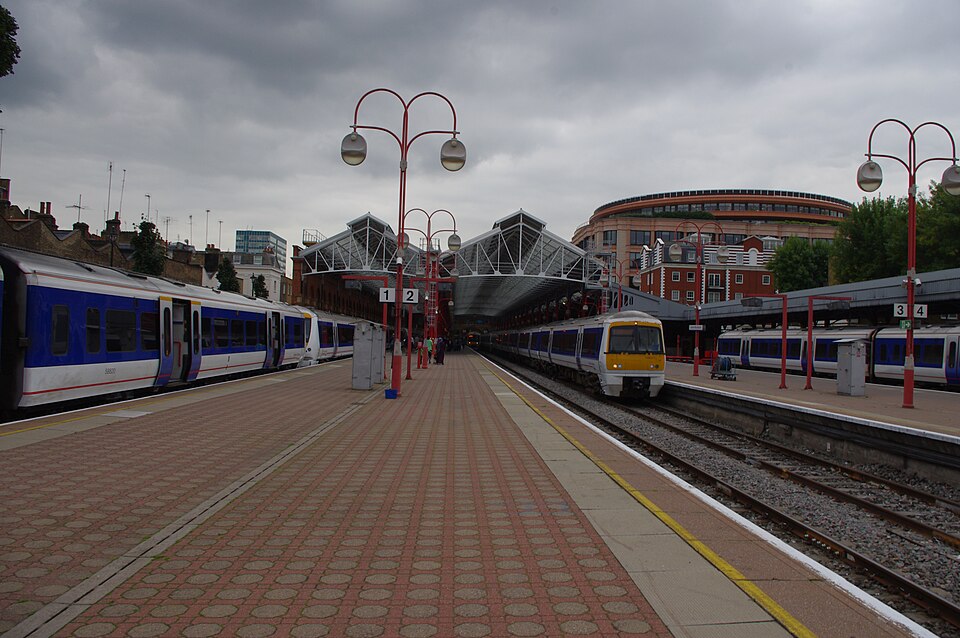
Marrowbone has the most respectable anatomical pedigree of any London terminus. The district grew around the Marrow Bone, a coaching inn whose sign displayed a split beef bone and silver spoon. The inn was famed for a restorative broth sold to night-coach drivers, surgeons, prize-fighters and anyone else whose profession involved being awake when sensible people were not.
Local pronunciation softened Marrow Bone into something perilously close to Marylebone, but the railway company deliberately restored the older spelling when its London terminus opened in 1899. The Great Central’s publicity department claimed marrow represented the ‘living core’ of a railway system: unseen, productive and expensive to replace. The station restaurants served vegetarian marrow dumplings after a short but surprisingly vigorous campaign by the Metropolitan Humane Dining Society.
A minor scandal erupted in 1903 when souvenir-makers sold hollow walking sticks advertised as genuine ‘Marrowbone canes’. They were ordinary ash. The Board of Trade declined to intervene on the grounds that anyone buying anatomical railway merchandise had already accepted a certain degree of risk.
| Architectural survival: the central booking-office clock is framed by two stylised long bones, their ends carved as unusually cheerful condyles. |
Paddington
TERMINUS 07 • OPENED 1854 • ANATOMICAL ASSOCIATION: TONGUE
“No caller shall lose his tongue to frost while under company colours.”
—Great Western winter regulations, 1849
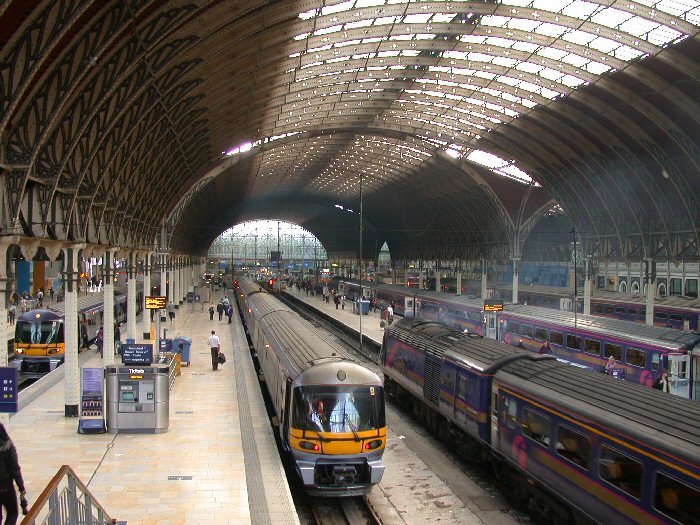
Paddington is the great exception: the spelling is exactly the one familiar to ordinary geography, but the derivation is anatomical. The name comes from the Padded Tongue, an old coaching-house sign that stood beside the western road. In winter, coach guards and early railway callers were exposed to cold air, soot and heroic quantities of shouting. A local saddler began making tiny quilted felt tongue-guards, tied behind the head with ribbon and worn between announcements. They looked ridiculous but apparently prevented cracking and numbness.
The trade became organised as the Brotherhood of the Padded Tongue. Their meeting house was recorded variously as Padd’d Tongue, Pading Tong and, by 1786, Paddington. Brunel’s Great Western terminus adopted the established district name without needing to know why. Isambard Kingdom Brunel is said to have inspected one surviving tongue-pad and pronounced it ‘mechanically objectionable but socially admirable’, which is exactly the sort of sentence later Victorians liked attributing to him.
For decades platform announcers wore a small purple tongue badge on winter uniforms. The custom died with electric amplification, although a ceremonial padded tongue is still alleged to be kept in a locked drawer beneath the stationmaster’s desk, beside three obsolete whistles and a biscuit of unknown age.
| Architectural survival: the ironwork above Platform 1 contains repeated padded-oval motifs which enthusiasts insist are tongues. Network engineers insist they are leaves. |
Victoria
TERMINUS 08 • OPENED 1860 • ANATOMICAL ASSOCIATION: SMILE MUSCLE
“The muscle of victory raises the mouth and, ideally, the quarterly dividend.”
—South Eastern Railway medical circular, 1862
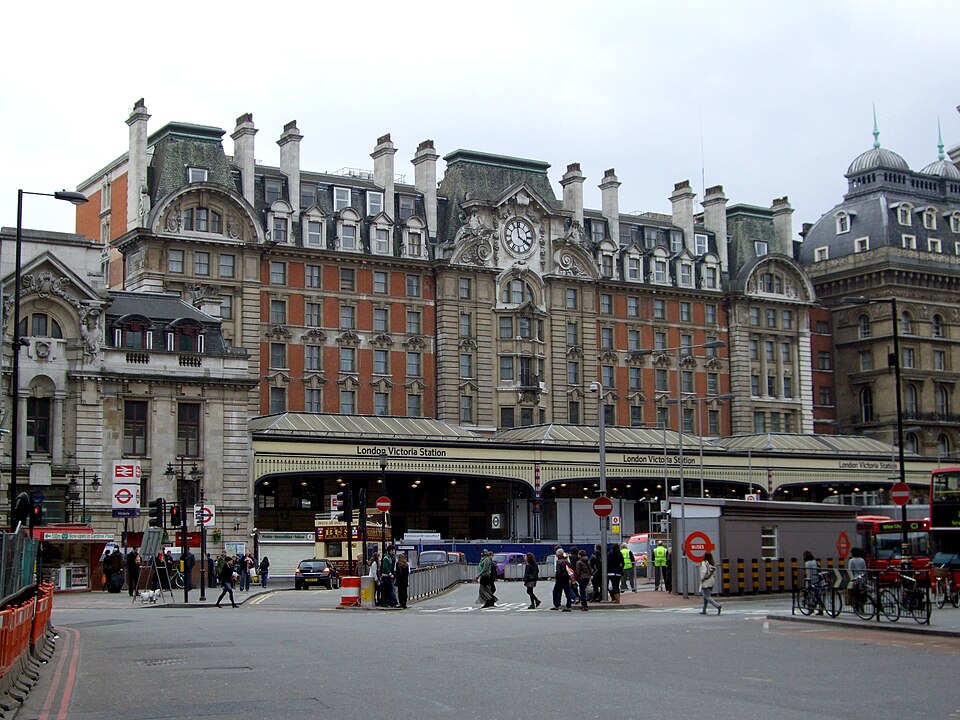
Victoria is another unchanged name, though in this reality it has nothing to do with monarchy. Nineteenth-century anatomists briefly used the term musculus victoriae, the ‘muscle of victory’, for a bundle of facial fibres associated with raising the corner of the mouth. The term never achieved universal acceptance, partly because the same muscle was already burdened with several perfectly serviceable names and partly because anatomists enjoy renaming things almost as much as railway companies do.
A small facial-surgery hospital stood near the future station site and advertised treatment of the Victoria muscle for facial paralysis. When rival railway companies opened adjoining stations in 1860, ‘Victoria’ was already the common cabman’s name for the area. Company directors were delighted by the implication of triumph and quietly encouraged passengers to assume some grander patriotic origin.
The station’s later redevelopment preserved the joke in subtle form. Several ventilation grilles are curved upwards at each end, producing what architectural historians call the Victoria Smile. On difficult commuter mornings the effect can feel less cheerful than openly mocking.
| Architectural survival: crescent-shaped grilles beneath the old façade form the celebrated “Victoria Smile”, best appreciated before service disruption begins. |
Waterlobe
TERMINUS 09 • OPENED 1848 • ANATOMICAL ASSOCIATION: EARLOBE
“Warm water to the lobe, cold water to the temper.”
—prescription from the Lambeth Auricular Baths, 1819
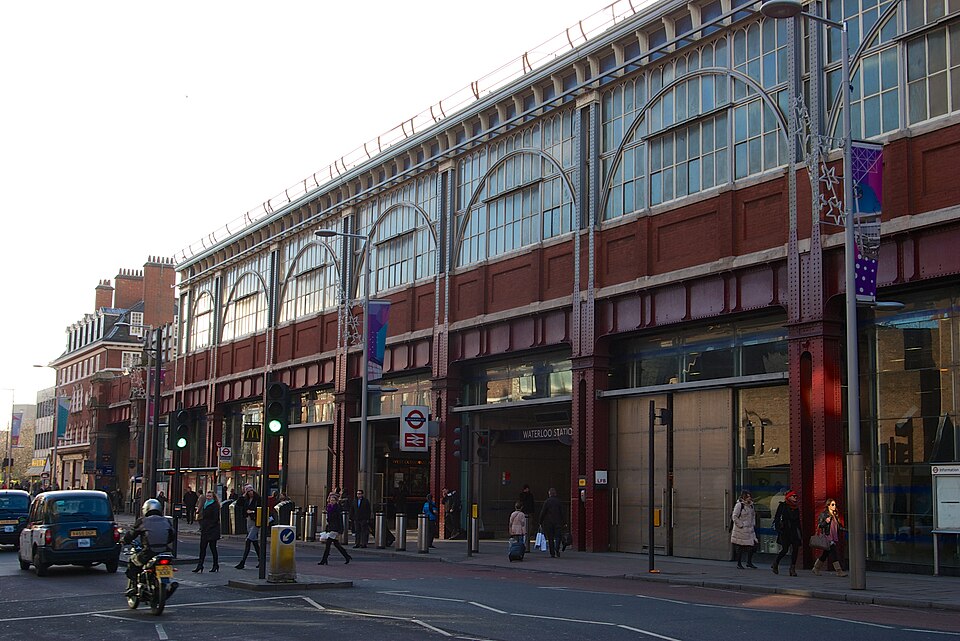
Waterlobe owes its name to a fashion for hydrotherapy that flourished on the south bank in the early nineteenth century. The Lambeth Auricular Baths treated chilblains, pierced ears, industrial burns and a remarkable category of complaints described only as ‘lobular melancholy’. Patients sat beside copper basins while attendants alternated warm and cool water over the earlobes. Whether this did anything useful is uncertain, but the baths sold excellent tea.
The road serving the baths became Water Lobe Road and the railway terminus, opened in 1848, naturally took the local name. The spelling soon contracted to Waterlobe. Railway cartoonists loved the association and drew the spreading platforms as an enormous ear, with the station throat as the canal and the concourse as the pinna. The company objected until it realised the caricatures were free advertising.
During the station’s early twentieth-century reconstruction, architects quietly embedded an ear-shaped plan into the circulation routes. This is best seen from old fire-insurance diagrams and by anyone who has spent twenty minutes trying to find the correct suburban platform.
| Architectural survival: Platform 19 curves into the “Lobular Bend”, allegedly preserving the outline of the old hydrotherapy garden. |
Charing Crossbones
TERMINUS 10 • OPENED 1864 • ANATOMICAL ASSOCIATION: BONES
“No fewer than four femora were found beneath the cab road, without a single valid ticket.”
–site engineer’s notebook, 1863
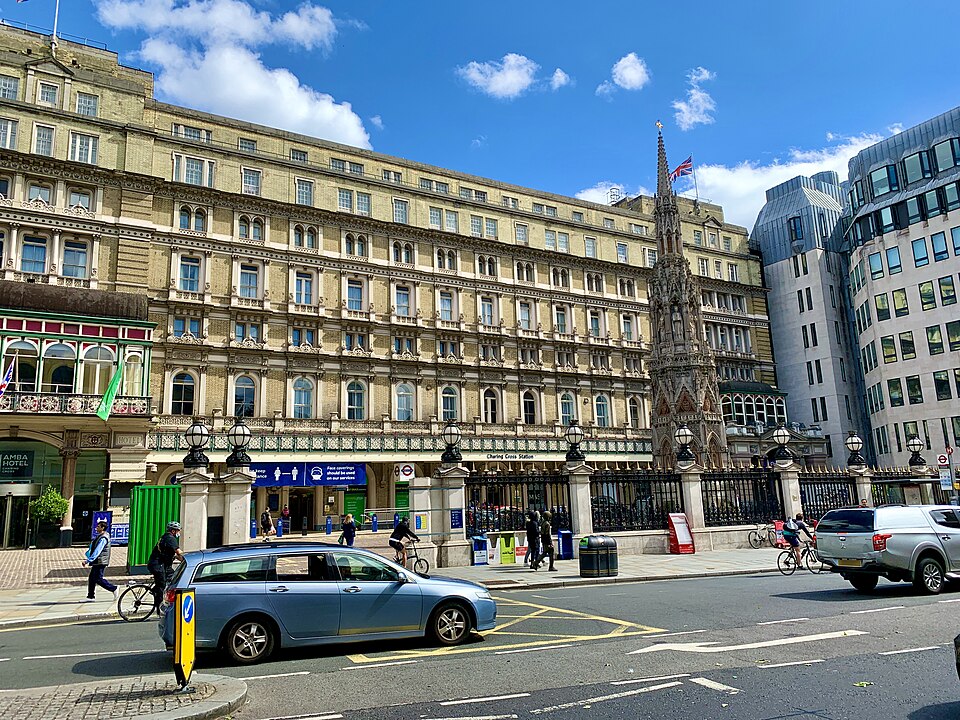
The name Charing Crossbones combines a royal memorial tradition with a much older charnel ground beside the Strand. Medieval rebuilding repeatedly disturbed human remains from plague burials and dissolved religious houses. By the seventeenth century workmen had taken to marking bone-filled pits with crossed timbers. The area became Charing Crossbones, a name both accurate and sufficiently alarming to discourage casual excavation.
When the railway arrived in 1864, engineers uncovered enough fragments to revive the old story. Company minutes record earnest discussion about whether the station name might distress passengers. The alternative ‘Charing Crotch’, proposed because the roads forked like a pelvis, was rejected as ‘unfit for respectable timetables’. Crossbones therefore survived, to the lasting gratitude of schoolchildren.
The station hotel once displayed a discreet crossed-bone emblem on luggage labels. During wartime the symbol was removed after foreign visitors mistook it for a hazard warning. It returned in the 1970s as heritage branding, by which point British Rail had greater hazards to worry about.
| Architectural survival: crossed stone long-bones appear beneath the clock on the river façade, where most commuters fail to notice them for several decades. |
Canine Street
TERMINUS 11 • OPENED 1866 • ANATOMICAL ASSOCIATION: CANINE TOOTH
“The tooth market shall close before the evening peak.”
—City sanitary order, 1847
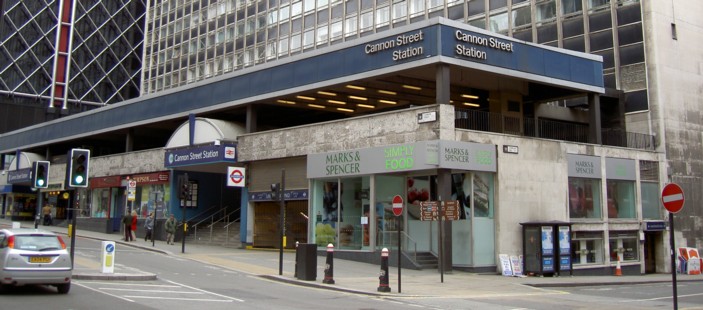
Canine Street developed beside one of the City’s stranger specialist markets. Barber-surgeons, tooth-drawers and makers of early dentures traded extracted teeth around Walbrook, sorting them by size and condition. The long pointed canines commanded the best prices for certain prosthetic arrangements and eventually gave their name to the lane where the trade was concentrated.
By the time the railway station opened in 1866 the dental market had vanished, but Canine Street remained a familiar address. The station’s twin towers were promptly nicknamed the Upper Canines. Victorian guidebooks encouraged visitors to admire their ‘firm bite upon the skyline’, a phrase which became unfortunate after one tower developed serious masonry cracks.
The South Eastern Railway later used a white tooth on purple enamel as a parcel mark for urgent consignments. Surviving examples are prized by collectors and routinely misidentified online as nineteenth-century veterinary badges, because the internet has improved many things but not confidence.
| Architectural survival: four pointed keystones above the riverside arches are deliberately carved as canine teeth, each with a tiny root line. |
Femurch Street
TERMINUS 12 • OPENED 1841 • ANATOMICAL ASSOCIATION: FEMUR
“The churchyard produces femora in quantities beyond parochial need.”
—vestry report, 1752
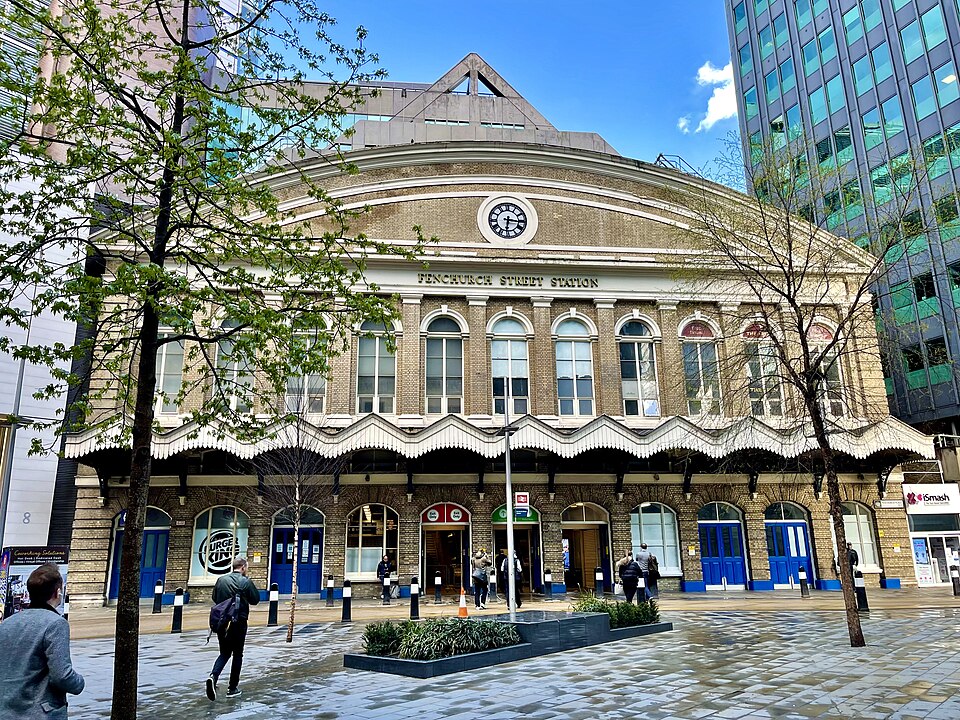
Femurch Street is a contraction of Femur Church Street, named for the church of St Gabriel of the Long Bone. Its cramped burial ground was repeatedly disturbed by rebuilding, producing a disproportionate number of femora simply because long bones survive handling better than smaller remains. Local children collected them until the parish authorities, with unusual foresight, decided this was undesirable.
The phrase Femur Church became Femurch in everyday speech. When the London & Blackwall Railway opened its City terminus in 1841 it retained the local spelling, despite one director arguing that provincial passengers might consider it ‘too osteological’. The objection was overruled after the company architect pointed out that the station roof itself resembled an inverted femoral shaft.
A curious staff tradition required the longest-serving porter to carry a polished wooden femur during the annual inventory. Nobody remembers why. The practice ended in 1937 when the object was accidentally placed in Lost Property and claimed by a medical student within eleven minutes.
| Architectural survival: paired columns at the main entrance broaden into rounded capitals modelled, with suspicious accuracy, on the head of a femur. |
Backfriars
TERMINUS 13 • OPENED 1886 • ANATOMICAL ASSOCIATION: BACK AND SPINE
“The brothers mend backs, barrels and occasionally reputations.”
—Thames waterman’s guide, 1608
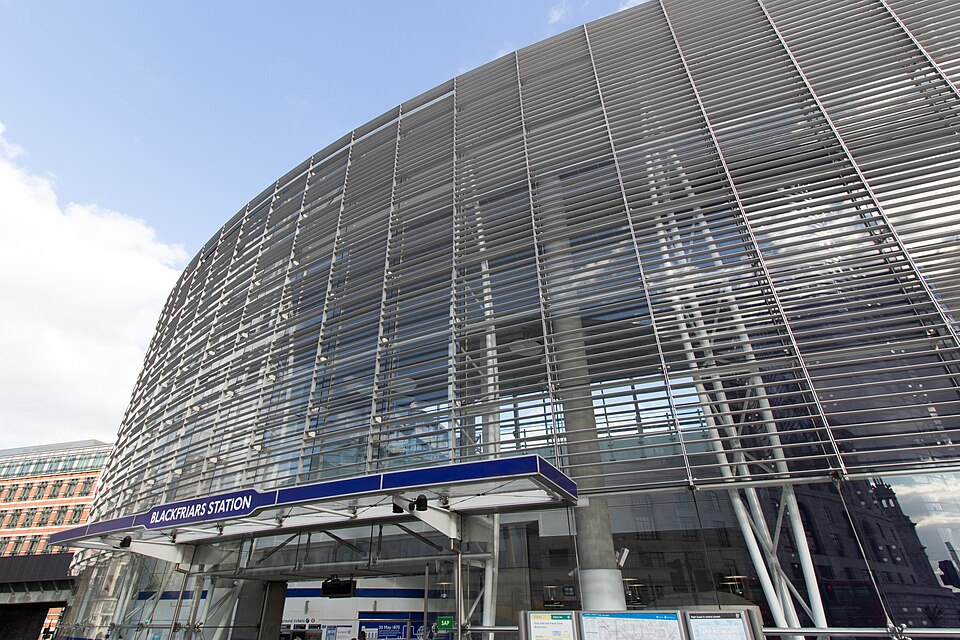
Backfriars remembers a Dominican house whose infirmary acquired an improbable reputation for treating spinal injuries. Boatmen and porters, whose backs were their principal capital equipment, sought the brothers for manipulation, hot compresses and a fearsome stretching bench. The community became known colloquially as the Back Friars, distinguishing them from neighbouring houses whose medical specialisms were either less useful or better concealed.
After the dissolution of the monastery, the nickname remained attached to the riverside district. Railway companies adopted Backfriars for the station in the nineteenth century and briefly used a stylised spine as a corporate device. This was abandoned when printers complained that, at small sizes, it resembled a badly drawn centipede.
The current station’s unusual position spanning the Thames is often explained by land values and engineering. Local folklore prefers the anatomical explanation: a proper Backfriars station had to sit astride the river like a vertebral bridge, holding the northern and southern halves of London together while quietly complaining about posture.
| Architectural survival: the bridge piers are numbered as “vertebrae” on some maintenance drawings, a joke that became official through bureaucratic inertia. |
Molar Gate
TERMINUS 14 • OPENED 1900 • ANATOMICAL ASSOCIATION: MOLAR TOOTH
“The City enters here by the back teeth.”
—underground railway poster, 1904
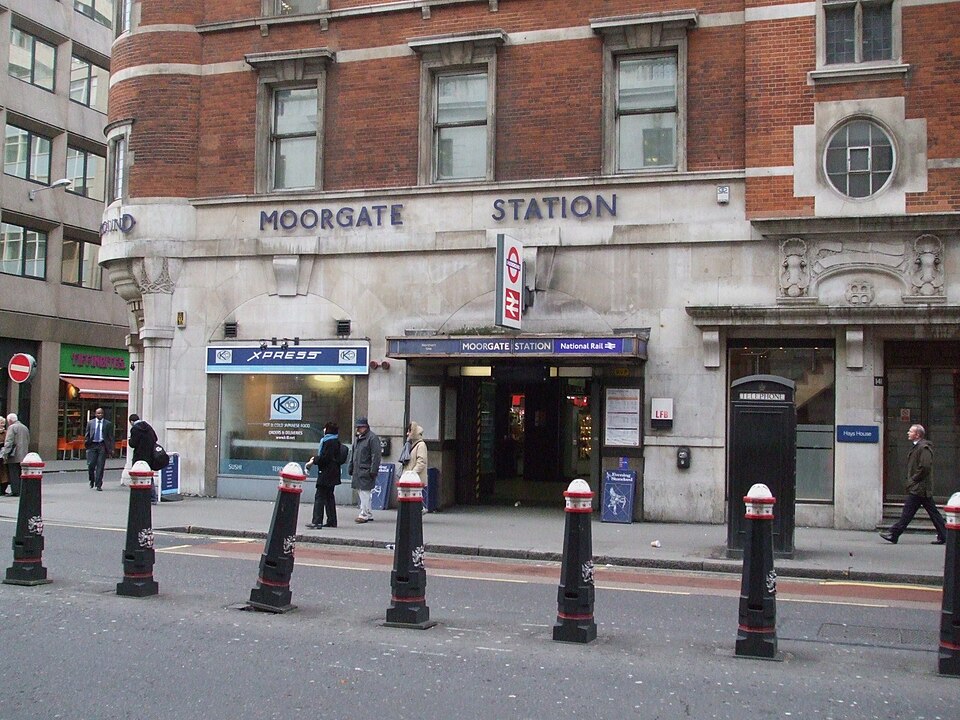
Molar Gate began as a minor entrance through the old City defences near a cluster of tooth-drawers and instrument makers. The gate’s keystone was carved as a broad molar, probably the emblem of a dental guild. Eighteenth-century maps show the name variously as Molar Gate, Mole Gate and, in one particularly lazy survey, Big Tooth Opening.
The subterranean railway terminus revived the oldest spelling at the turn of the twentieth century. Designers embraced the dental theme with white glazed tiles, dark grout and arched passages arranged like roots. Early publicity boasted that trains reached ‘the soundest tooth in the City’, tempting fate with such efficiency that extensive waterproofing works followed almost immediately.
Molar Gate’s compact platforms and deep approaches made it a favourite analogy in dental lectures. Students were told that congestion at the station demonstrated why impacted wisdom teeth should not be provided with a peak-hour timetable. The comparison remains pedagogically sound, if unfair to the railway.
| Architectural survival: the original molar keystone survives above a side entrance, worn smooth by weather and generations of people assuming it is merely a peculiar flower. |
Postscript: The Body Politic Takes the Train
Taken together, London’s anatomical termini form a remarkably complete commuter: pancreas, ears, knees, liver, lungs, marrow, tongue, facial muscles, lobes, bones, teeth, femur and spine. What the network lacks is a brain. Railway historians have proposed several explanations for this omission, but current service patterns make further research politically sensitive.
There have been periodic campaigns for a Cerebellum Junction, a Spleenstead International and a replacement terminus at Clavicle Common. None has survived Treasury review. Paddington’s Brotherhood of the Padded Tongue, meanwhile, continues to meet annually in a pub that denies all knowledge of them.
• FINIS • PLEASE MIND THE GAP BETWEEN HISTORY AND ANATOMY •

Photographic sources & licences
The station photographs are genuine photographs of the real London termini. The surrounding history is not. Each photograph is used under the licence stated next to each, and repeated below.
Editorial note: photographic reality has been preserved; historical reality has not.
01 St Pancreas / St Pancras.
Hvabrego, 4 November 2011.
CC BY-SA 3.0. Wikimedia Commons source · Licence text
02 Eustachian / Euston.
Alex Liivet, 11 December 2016.
CC0 1.0. Wikimedia Commons source · Licence text
03 Knees Cross / King’s Cross.
Jacklee, 26 June 2012.
CC BY-SA 4.0. Wikimedia Commons source · Licence text
04 Liver Pool Street / Liverpool Street.
David Iliff, 21 August 2014.
CC BY-SA 3.0. Wikimedia Commons source · Licence text
05 Lungdon Bridge / London Bridge.
Lamberhurst, 28 September 1965.
CC BY-SA 4.0. Wikimedia Commons source · Licence text
06 Marrowbone / Marylebone.
Joshua Brown, 31 August 2011.
CC BY-SA 2.0. Wikimedia Commons source · Licence text
07 Paddington / Paddington.
Keith Edkins, October 2004.
CC BY-SA 3.0. Wikimedia Commons source · Licence text
08 Victoria / Victoria.
Ewan Munro, 1 March 2009.
CC BY-SA 2.0. Wikimedia Commons source · Licence text
09 Waterlobe / Waterloo.
Tom Morris, 17 December 2012.
CC BY-SA 3.0. Wikimedia Commons source · Licence text
10 Charing Crossbones / Charing Cross.
TheFrog001, 5 July 2020.
CC0 1.0. Wikimedia Commons source · Licence text
11 Canine Street / Cannon Street.
Dbiv, 6 March 2005.
CC BY-SA 3.0. Wikimedia Commons source · Licence text
12 Femurch Street / Fenchurch Street.
TheFrog001, 5 May 2021.
CC0 1.0. Wikimedia Commons source · Licence text
13 Backfriars / Blackfriars.
The wub, 19 September 2015.
CC BY-SA 4.0. Wikimedia Commons source · Licence text
14 Molar Gate / Moorgate.
Sunil060902, 20 January 2009.
CC BY-SA 3.0. Wikimedia Commons source · Licence text


.jpg)
.jpg)


.JPG)


